Introduction
Where Does Paraffin Wax Come From? Paraffin wax is one of the most widely used materials in various industries due to its unique properties, such as being odorless and colorless, moisture-resistant, and having an oily texture. But what is the origin of this highly used substance, and how is it produced? In this article, we will thoroughly examine the origins of paraffin wax, its extraction and processing methods, and its various applications.
What is Paraffin Wax?
Paraffin wax is a saturated hydrocarbon compound primarily extracted from crude oil and coal. This substance is typically found in a solid, waxy form and can be transparent or semi-transparent depending on the level of refining. Paraffin wax melts at high temperatures and can solidify again, making it ideal for use in different industries.
Origins of Paraffin Wax
1. Crude Oil
The primary source of paraffin wax is crude oil, a complex mixture of organic compounds containing saturated and unsaturated hydrocarbons. During the refining process in oil refineries, various products such as gas, gasoline, diesel, kerosene, and paraffin wax are obtained.
Extraction Process of Paraffin Wax from Crude Oil
- Crude Oil Distillation: In the first stage, crude oil is placed in distillation towers at different temperatures, separating its components.
- Extraction of Base Oils: The base oils containing paraffin wax are extracted.
- Crystallization Process: The base oils are cooled, and paraffin wax crystallizes within them.
- Filtration and Separation: The paraffin wax is separated from the oils and further refined for purity.
2. Coal
Coal is another source of paraffin wax production, although its use is much less common today compared to crude oil. During the carbonization process of coal, volatile hydrocarbon compounds are released, from which paraffin wax can be extracted.
3. Oil Shale
Oil shale is a type of sedimentary rock containing organic compounds known as kerogen, which, when heated appropriately, produce synthetic oil and ultimately paraffin wax.
Types of Paraffin Wax
Paraffin wax is categorized into several types based on its level of purification and refining:
1. Fully Refined Paraffin Wax
This type of wax has the lowest oil content (less than 0.5%) and is the most transparent and pure. It is used in the food, pharmaceutical, and cosmetic industries.
2. Semi-Refined Paraffin Wax
This wax has a higher oil content (about 1-3%) and, due to minor impurities, is mainly used in candle making, waterproof cardboard production, and match manufacturing.
3. Crude Paraffin Wax
This type of wax contains a high amount of oil and is primarily used in industrial applications and grease production.
Properties of Paraffin Wax
Paraffin wax possesses unique characteristics that make it suitable for various applications:
- Variable melting point: Ranges from 46 to 68 degrees Celsius
- Insoluble in water but soluble in organic solvents
- Odorless and colorless
- High moisture resistance
- Flexible and compatible with other materials
Applications of Paraffin Wax
1. Candle Making Industry
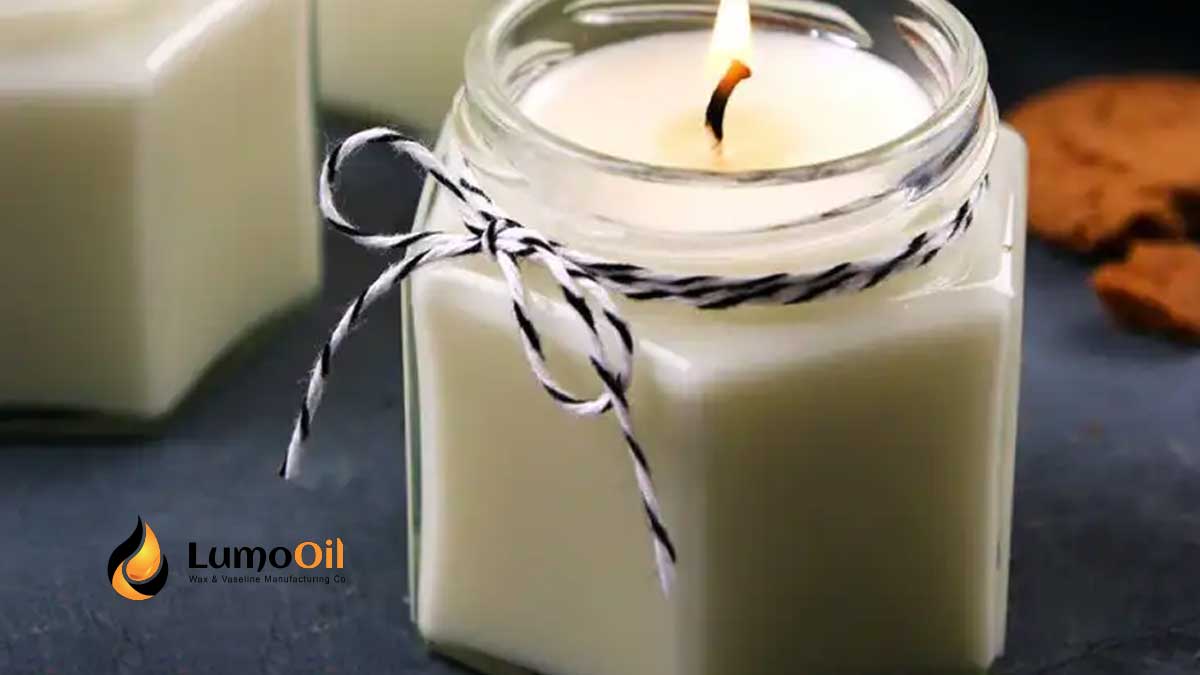
One of the most important and widespread uses of paraffin wax is in candle making. Due to its appropriate melting point and clean burning, it is an ideal choice for decorative, religious, and industrial candles.
2. Pharmaceutical and Cosmetic Industries
Paraffin wax is used in the production of vaseline, moisturizers, lip balms, and facial masks. This substance plays a vital role in retaining skin moisture.
3. Food Industry
In the food industry, paraffin wax is used for coating fruits, chocolates, and cheeses to prevent spoilage and moisture loss.
4. Packaging and Paper Industry
Paraffin wax is used in the production of waterproof papers, packaging cartons, and disposable containers. It increases the resistance of paper and cardboard against moisture and grease.
5. Textile and Leather Industry
In the textile industry, paraffin wax is used to increase the softness and flexibility of fabrics. In the leather industry, it enhances shine and prevents cracking.
6. Automotive and Lubricant Industry
In the automotive industry, paraffin wax is used as an anti-rust coating for metal surfaces. It is also used in industrial oils and lubricants.
Conclusion
Paraffin wax is one of the most essential and widely used materials in various industries, primarily extracted from crude oil, coal, and oil shale. Depending on the refining process, different types of paraffin wax with unique properties and applications are available in the market. From candle making to pharmaceuticals, food, and packaging industries, this material plays a crucial role in our daily lives.